
Home > Algorithm Development
Build Smarter Products with Algorithms That Hold Up Outside the Lab
At Ascenten Technologies, we work with companies that need their products to make sense of real-world data, not just clean datasets in a lab. Our team handles Algorithm Development for products that depend on accurate, real-time decisions from sensors, audio, images, or signals.
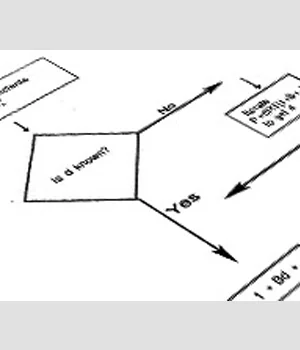
From DSP Development and Signal Processing to Image Processing, Audio Processing, Sensor Fusion, and AI Algorithms, we provide end-to-end algorithm engineering across industrial automation, medical devices, automotive electronics, consumer products, and IoT applications. Every algorithm is built and validated against your actual data, not a clean sample set.Our structured development process helps catch accuracy and performance issues early, reduce tuning cycles, and get algorithms to a state your firmware and software teams can actually integrate.

Every product that processes real-world data comes with its own accuracy, latency, and resource constraints. Our engineers work through each layer of that problem, from raw signal capture to the final decision the algorithm produces, so the result holds up once it leaves our hands.
Every engagement is backed by deep technical knowledge, proven methodologies, and a commitment to delivering robust and reliable products.
Many products depend on getting clean, usable data out of noisy signals in real time. Our DSP Development work covers the design and optimization of digital signal processing pipelines for products where latency and accuracy both matter.
Our DSP engineering covers:
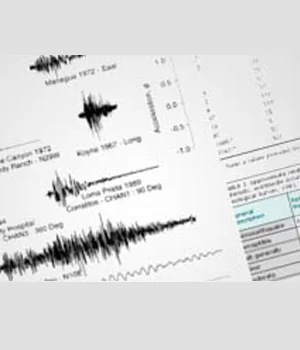
Raw sensor and instrumentation data rarely arrive clean. Our Signal Processing work turns noisy, real-world inputs into data your application can actually trust and act on.
Each algorithm is validated against real sensor data and edge cases, not just the conditions it was originally designed for.
Our signal processing capabilities include:
Vision-based products need algorithms that work under real lighting, real motion, and real camera limitations. Our Image Processing work is built around the constraints of your actual imaging hardware, not an idealized dataset.
We test against the lighting, motion, and sensor variation your product will actually see in the field.
Our image processing services include:
Products that capture or analyze sound need algorithms that stay accurate outside a quiet test booth. Our Audio Processing work covers everything from noise suppression to feature extraction for voice and acoustic applications.
We design every audio pipeline around the actual microphone hardware and acoustic environment of your product.
Our audio processing capabilities include:
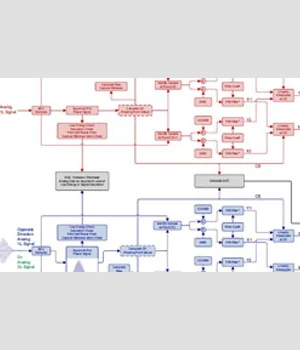
A single sensor rarely tells the whole story. Our Sensor Fusion work combines data from multiple sensors into a single, reliable output that your product can act on with confidence.
We design fusion algorithms to stay accurate even when one sensor drifts or temporarily drops out, not just when everything reports clean data.
Our sensor fusion engineering covers:
Our algorithm development experience spans a wide range of industries, each with its own accuracy, latency, and reliability expectations.
Each industry comes with its own constraints around accuracy, real-time performance, and certification. We design algorithms with those requirements in mind from the first prototype.
Industries we serve:
Adding intelligence to a product only matters if it works reliably on the hardware it ships on. Our AI Algorithms work covers model development, optimization, and deployment for embedded and edge environments.
We build models around the memory, power, and processing limits of your actual target hardware, not a server-class reference setup.
Our AI algorithm services include:
An algorithm that performs well on a clean dataset and an algorithm that performs well on your actual product are not always the same thing. Ascenten combines deep signal processing and AI expertise with practical hardware knowledge to deliver algorithms that hold up in the field.
Experienced algorithm engineering team across signal, image, and audio domains.
Hands-on DSP, sensor fusion, and AI model expertise.
Algorithms validated against real hardware, not just simulation.
Rigorous accuracy and performance testing before deployment.
Close collaboration with embedded and firmware teams.
Faster tuning through real-world data validation.
Scalable support from prototype to production algorithms.
Dedicated engineering team with clear project communication.
Whether you are building an algorithm from scratch or optimizing one that already exists, our engineers work closely with your team to deliver results that meet your technical, commercial, and reliability goals.
Start Your Project
From early feasibility work to production deployment, Ascenten Technologies delivers algorithm development that products can actually depend on.
Whether you need DSP Development, Signal Processing, Image Processing, Audio Processing, Sensor Fusion, or AI Algorithms, our team is ready to help you build smarter and faster.Let's build your next product together.
We would really like to hear from you and answer any questions. Please email us at info1@ascenten.net
or call us on
India Landline: +91-79-2646 4646
India Mobile: +91-89800 00973
Home | Careers | Ethics | Privacy Policy | Terms Of Use | Code Of Conduct